
Spotted Lanternflies Are Here.Don't Let an Infestation Take Over Your Property.
Commercial and residential spotted lanternfly inspection, mitigation, host-plant management and ongoing control.
What You See May Only Be Part of the Problem.
Visible adult lanternflies may only be one part of the issue. Egg masses, host vegetation, surrounding populations, lifecycle stages and future activity may also need to be considered. Simply killing the bugs you can see may not address what's actually sustaining the infestation.
Egg Mass
Overwintering egg masses laid on trees, surfaces and outdoor objects.
Nymph
Nymphs emerge and feed, moving through several instar stages.
Adult
Winged adults congregate in large numbers on host trees and plants.
Egg Laying
Adults lay new egg masses that can survive through winter.
Next Generation
The cycle can repeat, contributing to recurring seasonal activity.
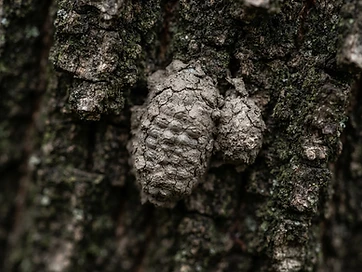
Egg masses are grey, mud-like patches laid on bark, firewood, outdoor furniture, vehicles and other surfaces — and can overwinter.
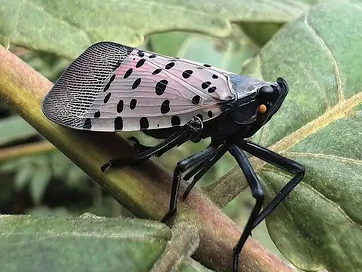
Visible adults may indicate a larger property-level issue including host plants, egg masses and surrounding populations.
Concerned about activity on your property?
Start Here: Managing Spotted Lanternflies Yourself
Not every spotted lanternfly sighting requires professional service. Property owners can take practical steps to remove individual insects, reduce populations, address egg masses and help limit their spread. Our goal is to give you useful information whether you ultimately need our help or not.
REMOVE WHAT YOU CAN SEE
For small, manageable numbers of spotted lanternflies, physical removal can be a practical first step.
- Physically killing individual lanternflies
- Removing manageable groups from accessible areas
- Using mechanical removal methods where practical
- Checking outdoor surfaces, equipment, vehicles and objects
This is most realistic when activity is limited and accessible. Removing visible adults does not eliminate an established infestation.
LOOK FOR EGG MASSES
Spotted lanternflies lay egg masses on many outdoor surfaces — and they can be physically removed.
- Trees, outdoor furniture, vehicles and trailers
- Stone, equipment and other hard outdoor surfaces
- Grey, mud-like patches that can overwinter
Follow current Connecticut Agricultural Experiment Station or extension guidance for proper removal and disposal. Egg-mass management can help reduce the number that hatch later in the season.
USE TREE TRAPS RESPONSIBLY
Spotted lanternfly nymphs commonly crawl upward on tree trunks and can be intercepted using traps.
- Circle / funnel traps wrap around a tree and direct climbing nymphs into a collection container
- They do not rely on exposed adhesive
- Generally less risk to birds and non-target wildlife
Sticky bands have been used historically, but exposed adhesive can capture birds, beneficial insects and other wildlife. If used, they should have an appropriate wildlife barrier and be monitored regularly. We do not recommend exposed sticky bands without wildlife protection.
ADDRESS THE ENVIRONMENT AROUND THEM
Long-term management isn't only about killing visible insects — it's also about the environment that sustains them.
- Learn to identify Tree-of-Heaven and other heavily used host vegetation
- Monitor trees and vegetation where lanternflies repeatedly congregate
- Inspect vehicles, trailers, furniture and equipment before moving them
- Monitor the property throughout the lanternfly lifecycle
Tree-of-Heaven management can require planning — improper removal may stimulate additional root sprouts. Consult reliable guidance or a qualified professional when significant host-plant management is necessary.
What About Dish Soap, Vinegar and Homemade Sprays?
You may see homemade spotted lanternfly sprays recommended online using dish soap, vinegar, oils or other household products. We do not recommend presenting these as established treatments. Homemade mixtures may damage plants, affect non-target insects, pets or other organisms, and their effectiveness can vary. For chemical treatment, homeowners should use products legally labeled for the intended site and pest and follow all label directions.
When Is It Time to Get Help?
DIY management can make sense when activity is small, accessible and manageable. Professional assessment may make more sense when you're dealing with:
- Large or recurring populations
- Multiple affected trees
- Significant host vegetation
- Hard-to-reach activity
- Large residential properties
- Commercial properties
- HOAs or multi-property locations
- Activity that keeps returning despite your efforts
You don't have to guess. If the problem has become larger than you want to handle yourself, we can assess the property and help determine the appropriate next step.
Good information should be accessible.
We want Connecticut property owners to understand what they're dealing with, what they can reasonably handle themselves, and when additional help may make sense.
Here's How We Help
ASSESS
We evaluate the property, visible activity, host vegetation and potential sources of infestation.
RECOMMEND
We identify an appropriate mitigation and management approach based on the property and level of activity.
TREAT & MONITOR
Where appropriate, we address the immediate problem and establish an ongoing management approach designed to reduce future activity.
We Service Your Type of Property.
One assessment process, tailored to the property — whether it's a single home or a multi-site portfolio.
Questions & Answers
We evaluate your property's visible spotted lanternfly activity, host vegetation, and conditions that may be contributing to the infestation. Based on what we find, we recommend an appropriate mitigation and management approach.

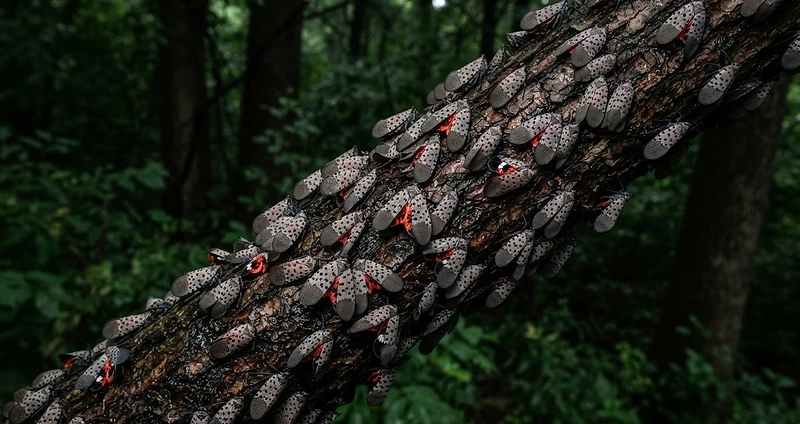
Seeing Spotted Lanternflies?
Find out what you're dealing with and what can be done about it.